
GPT-6 Astra vs Claude Fable 5.1
The definitive breakdown of the two most powerful frontier AI models on the market, analyzing their architectures, strengths, and professional use cases.
The artificial intelligence landscape is currently defined by a relentless duopoly. On one side stands OpenAI's GPT-6 Astra, an autonomous, agentic powerhouse designed to interact seamlessly with operating systems and digital environments. On the other side stands Anthropic's Claude Fable 5.1, a model renowned for its massive context window, nuanced semantic reasoning, and an integrated user interface that revolutionized front-end design.
Because these two models were released in close proximity and dominate the current benchmark leaderboards, professionals often treat them as interchangeable commodities. This is a critical strategic error. While both models are phenomenally capable of generating text and writing code, their underlying architectures and design philosophies dictate entirely different optimal use cases.
Choosing the wrong model for a complex task does not just lead to suboptimal results; it leads to hallucinations, wasted compute tokens, and hours of frustrating debugging. This article provides a rigorous, deep-dive comparison between GPT-6 Astra and Claude Fable 5.1, breaking down exactly where each model excels, where they falter, and how to orchestrate a workflow that leverages the distinct advantages of both systems.
Architectural Differences
To understand the difference in output between these two models, one must first understand their divergent structural goals. OpenAI designed GPT-6 Astra with a core focus on "agency." Astra is not merely a conversational partner; it is an executor. It was trained extensively on reinforcement learning environments that require taking multi-step actions across computer interfaces. Astra is designed to browse the live internet, open files, run local code environments, and self-correct when an API call fails. Its architecture is biased heavily toward decisive action.
Conversely, Anthropic designed Claude Fable 5.1 with a core focus on "contextual fidelity and alignment." Fable 5.1 features a substantially larger context window, allowing it to process massive volumes of text—entire code repositories, long legal transcripts, or multiple books—simultaneously without suffering from the "lost in the middle" phenomenon where models forget information buried in the center of a prompt. Fable's architecture is biased toward deep analysis and careful, nuanced reasoning.
These architectural biases manifest immediately in user interactions. When presented with a complex problem, Astra will often immediately attempt to write a script to solve it, occasionally jumping to conclusions before fully analyzing the constraints. Fable 5.1, on the other hand, will often pause to deconstruct the logic of the prompt, asking clarifying questions or outlining a theoretical framework before generating the final output. Astra acts; Fable contemplates.
This fundamental divergence means that your choice of model should be dictated by the nature of the task. If the task requires navigating a chaotic environment, parsing a messy API, and brute-forcing a solution through trial and error, Astra's agentic architecture is vastly superior. If the task requires synthesizing information from fifty different PDF documents to draft a highly nuanced executive summary, Fable's contextual fidelity makes it the undisputed champion.

Coding and Development Showdown
In the realm of software engineering, the battle between Astra and Fable is fiercely contested. However, they dominate entirely different sides of the tech stack. Claude Fable 5.1 has become the undeniable favorite for front-end developers and UI/UX designers. This is largely due to its remarkable adherence to design systems and its ability to generate pristine, accessible semantic HTML and Tailwind CSS. When tasked with building a complex React component, Fable rarely hallucinates class names and possesses a near-perfect understanding of responsive flexbox layouts.
Furthermore, Fable 5.1's massive context window makes it the ideal tool for refactoring large monolithic files or migrating entire codebases from one framework to another (e.g., Vue to React). It can hold the entire architectural context in memory, ensuring that state management variables are passed correctly across deeply nested components.
GPT-6 Astra, however, reigns supreme on the backend and in DevOps environments. Astra's primary advantage is its ability to write, execute, and debug code autonomously. If you instruct Astra to set up a Docker container, configure a reverse proxy using Nginx, and deploy a PostgreSQL database, it does not just give you the script; it can actively interact with the terminal to execute those commands, read the resulting error logs, and automatically adjust the configuration files until the deployment succeeds.
When dealing with complex algorithmic logic, advanced data structures, or obscure backend API integrations, Astra's mathematical reasoning often surpasses Fable's. Astra is more willing to write aggressive, highly optimized algorithms, whereas Fable tends to write safer, more verbose code. Therefore, the modern full-stack developer often uses Fable to design the visual interface and Astra to construct the underlying database architecture and API routes.

Analytical Reasoning and Writing
When evaluated on their capacity for long-form writing, content generation, and semantic analysis, a clear winner emerges: Claude Fable 5.1. Anthropic has heavily optimized Fable to act as an incredibly skilled editor and writer. Fable possesses an uncanny ability to perfectly mimic a specific tone of voice, adhere strictly to brand guidelines, and generate prose that sounds distinctly human rather than mechanically AI-generated.
Fable avoids the repetitive, flowery transitional phrases that often plague outputs from OpenAI models (the infamous "In conclusion..." or "A tapestry of..."). When asked to analyze a complex legal contract or a dense medical journal, Fable 5.1 will meticulously cross-reference claims within the text, rarely hallucinating facts that are not explicitly present in the provided document.
GPT-6 Astra, conversely, often struggles with stylistic subtlety. Its writing tends to be highly structured, heavily bulleted, and somewhat sterile. It prefers to get straight to the point, which is excellent for drafting technical documentation or internal corporate memos, but poor for writing engaging marketing copy or persuasive essays.
However, Astra reclaims its superiority when analytical reasoning crosses over into the realm of mathematics and data manipulation. If you need to analyze a spreadsheet containing 50,000 rows of customer data to find statistical correlations, Fable will attempt to reason through it semantically and likely fail or hallucinate numbers. Astra will simply write a Python script, execute it in its advanced data analysis environment, generate the statistical models, and output the correct mathematical reality. Thus, Fable is for qualitative reasoning; Astra is for quantitative reasoning.
The Interface and User Experience
The raw capability of a model is only as useful as the interface that allows humans to interact with it. Here, both companies have taken radically different approaches to user experience, fundamentally altering how professionals use their tools.
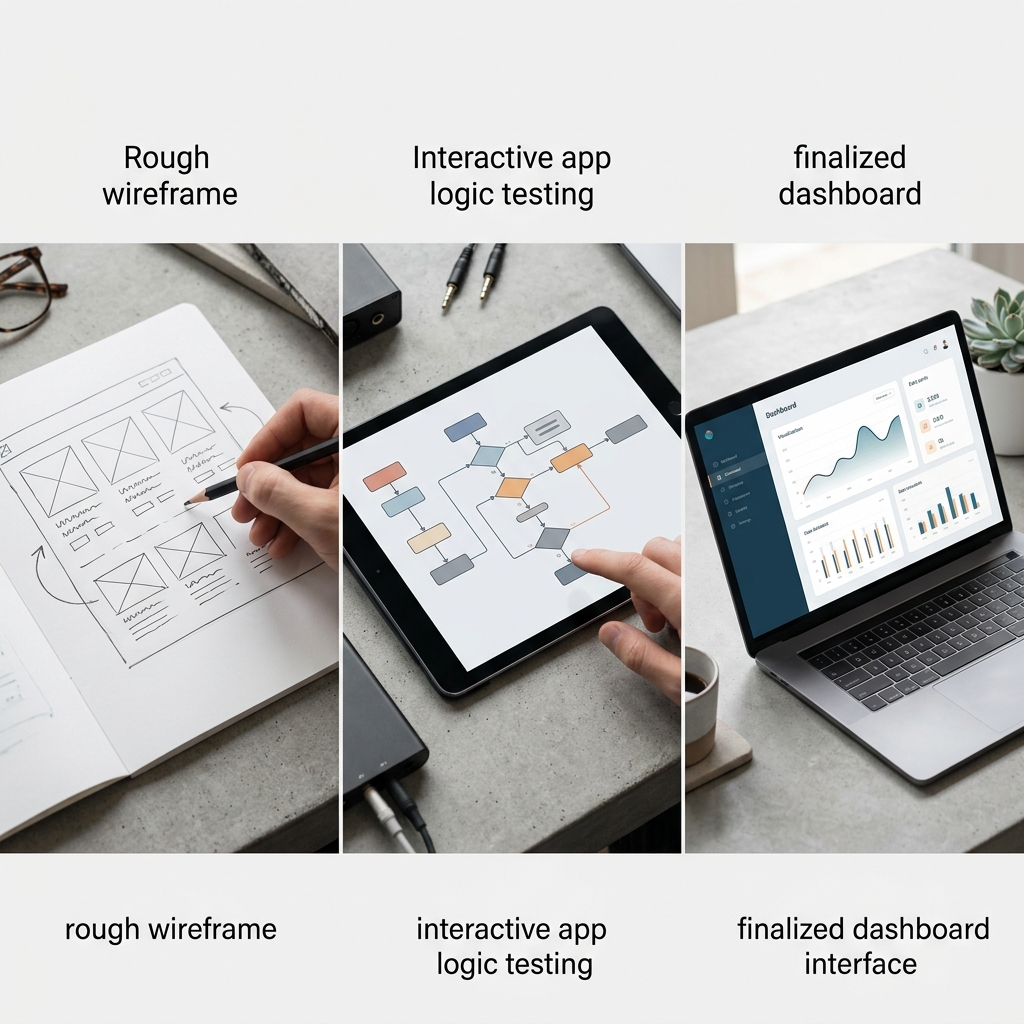
Anthropic revolutionized the interface with the introduction of "Artifacts" for Claude. When Fable 5.1 generates a piece of code, a vector graphic, or a markdown document, it does not just dump the text into the chat stream. It creates a dedicated, persistent window on the right side of the screen. For developers, this means React components render live in the browser instantly. For writers, it means having a clean, isolated document editor separate from the chat history. Artifacts turns Claude from a chatbot into a dynamic creative workspace, heavily encouraging rapid, visual iteration.
OpenAI, however, integrated GPT-6 Astra heavily into "ChatGPT Sites" and its advanced Voice and Canvas modes. Astra's interface is designed to be deeply multi-modal. You can speak to Astra while simultaneously highlighting code on your screen, and Astra will respond in real-time while editing the highlighted text. Furthermore, Astra's interface is deeply tied to its web-browsing and tool-use capabilities. It provides a seamless experience for searching the live internet, summarizing realtime news, or executing Python code in a secure sandbox.
While Fable's Artifacts is currently the superior interface for focused, single-file creative work (like designing a landing page), Astra's interface is superior for research, multi-step problem solving, and tasks that require constant interaction with the outside world.

The Final Verdict
The debate over whether GPT-6 Astra or Claude Fable 5.1 is the "better" model is ultimately flawed. Professional engineers and analysts do not view this as a zero-sum game; they view these models as complementary tools within a broader technological stack.
Choose Claude Fable 5.1 when: You are designing front-end user interfaces, writing long-form creative or marketing copy, analyzing massive documents like legal contracts, or require strict adherence to complex stylistic guidelines. Its massive context window and nuanced semantic reasoning make it the ultimate digital editor and UI prototyping engine.
Choose GPT-6 Astra when: You are building complex backend infrastructure, executing data analytics on large CSV files, debugging obscure DevOps errors, or require an autonomous agent to browse the web and execute a multi-step research pipeline. Its mathematical prowess and agentic execution capabilities make it the ultimate digital operator.
In the modern professional workflow, the highest level of leverage is achieved by using both. An elite software engineer might use Fable 5.1 in the morning to rapidly prototype a beautiful, animated dashboard component, and then switch to Astra in the afternoon to autonomously construct the PostgreSQL database and API endpoints required to power it. By understanding the distinct architectural strengths of both models, you transition from being a casual user to a masterful orchestrator of artificial intelligence.